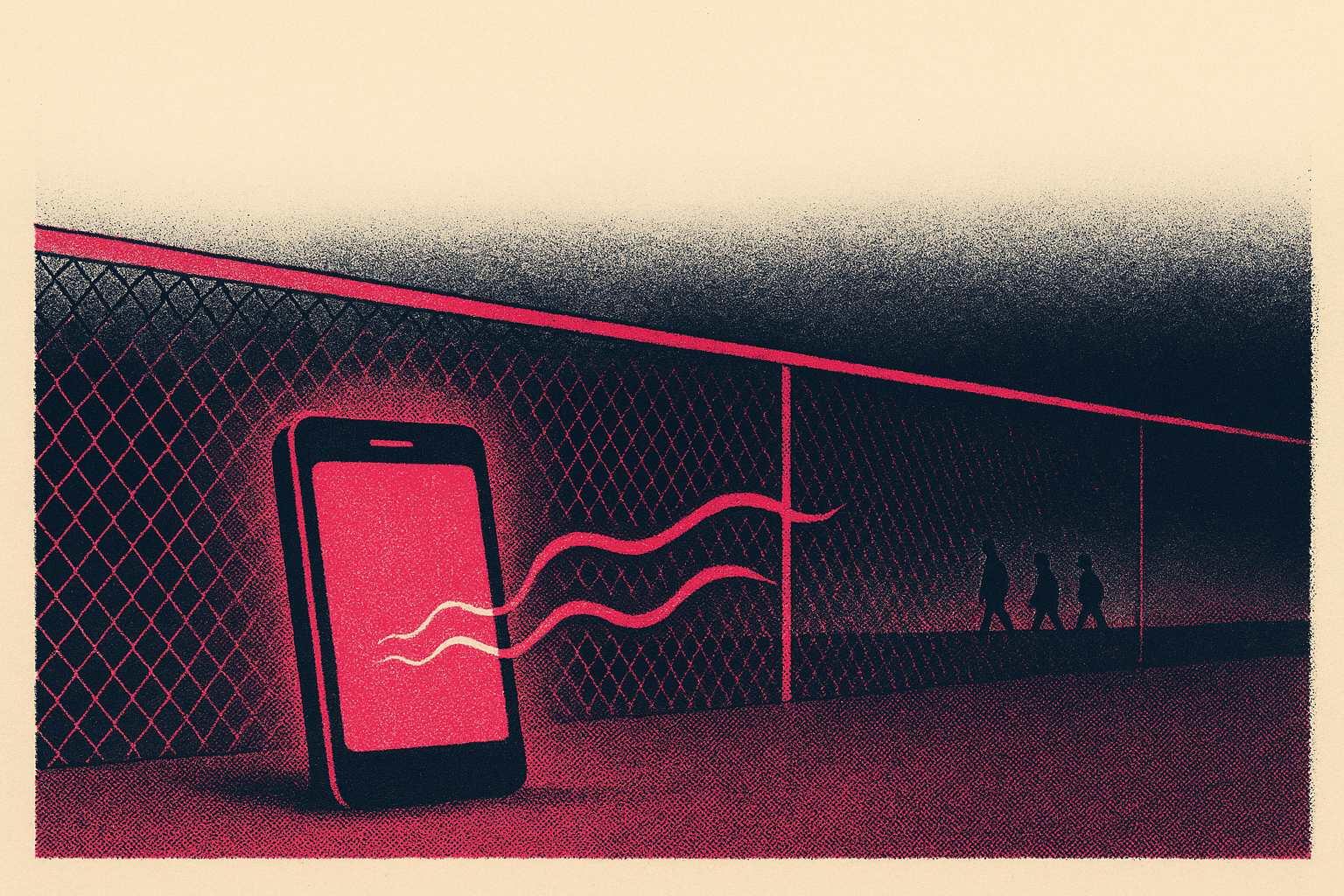
Spotify stopped the ICE ads. It won't promise not to run them again.
The platform confirmed the recruitment campaign ended in late December, but declined to rule out future government contracts. What looks like capitulation is actually a preview.
When Spotify confirmed in early January that ICE recruitment ads were no longer running on its platform, the phrasing was careful. Not 'we pulled them.' Not 'we won't run them again.' Just: they're not running now. Paste Magazine caught what the statement left out — the company declined to say whether it would accept future ICE campaigns. The ads stopped. The door stayed open.
The framing from most coverage treats this as a straightforward activist win. Artists pulled their catalogs — Massive Attack, King Gizzard, Deerhoof — and Spotify blinked. Except Spotify didn't blink. It ran the ads for months, collected $74,000 from DHS, and only confirmed their end after the contract term expired. The 'Spotify Unwrapped' campaign organized by Indivisible and Working Families pulled enough visibility to trend, but the platform reported 263 million premium subscribers by year-end. The boycott was loud. The subscription base didn't move.
What did move was institutional pressure. New York City Comptroller Brad Lander sent a letter citing fiduciary risk and reputational damage — not moral objection, but exposure. That's the language platforms respond to. The ads described undocumented migrants as 'dangerous illegals' and framed ICE work as defending America. Activists called it xenophobic propaganda. Spotify called it compliance with ad policy. Both were right, which is the problem.
When those values conflict with a revenue stream, the revenue stream has structural priority.
The second front — CEO Daniel Ek's firm Prima Materia leading a €600 million funding round for Helsing, a German military AI company building drone technology — landed differently. Artists who'd tolerated Spotify's payment structure and its amplification of Joe Rogan drew the line at literal weapons development. 'We don't want our music killing people,' Deerhoof said. King Gizzard's Stu Mackenzie told the Los Angeles Times the band had been 'saying fuck Spotify for years' over documented grievances, but the Helsing investment clarified the exit. The ICE ads were the spark. The defense contract was the structure.
Most analysis treats these as parallel controversies — both bad, both boycott-worthy. The actual through-line is harder. Spotify's ad policy allows government recruitment that its users experience as political messaging, and its CEO's investment choices position the company within supply chains its artists find morally untenable. The platform doesn't see either as editorial decisions. It sees them as business. The users and artists treating them as editorial are correct, but the correction available to them — catalog removal, subscription cancellation — operates at a scale the platform can absorb.
Epitaph Records put it plainly: 'Artists and fans deserve platforms that reflect the values of the culture they sustain.' The claim assumes the platform is built on cultural values. Spotify is built on liquidity. It aggregates listening and sells access — to users, to advertisers, to governments. The values of the culture it sustains are incidental to the model. When those values conflict with a revenue stream, the revenue stream has structural priority.
The shape emerging isn't about whether Spotify will reverse course. It's whether the infrastructure of music distribution — built on the premise that more access is always better — can hold the weight of what access now includes. The ads stopped running. The investment in Helsing didn't reverse. The policy didn't change. What artists are discovering is that removing their work from Spotify doesn't remove Spotify. It just moves the catalog somewhere quieter.