The Met Gala dress that wasn’t AI, and the panic that proved the point.
Twenty-four hours of certainty about a thing made by hands. The atelier had the build sheet ready. The houses that don’t are about to lose the benefit of the doubt.
By Tuesday morning the verdict was in: the dress was AI. By Wednesday afternoon it wasn’t. Most of the people who had a strong take on Tuesday did not update their take on Wednesday. The thing the panic actually proved was about us, not the dress.
The dress in question — and you have seen it by now — was on the carpet in a colour that does not exist in nature, a fabric that did not behave the way fabric behaves, and a silhouette that the algorithm had been pumping into mood boards all spring. It looked, in the photos, generated. It walked, in the video, generated. The internet decided collectively that it was a stunt.
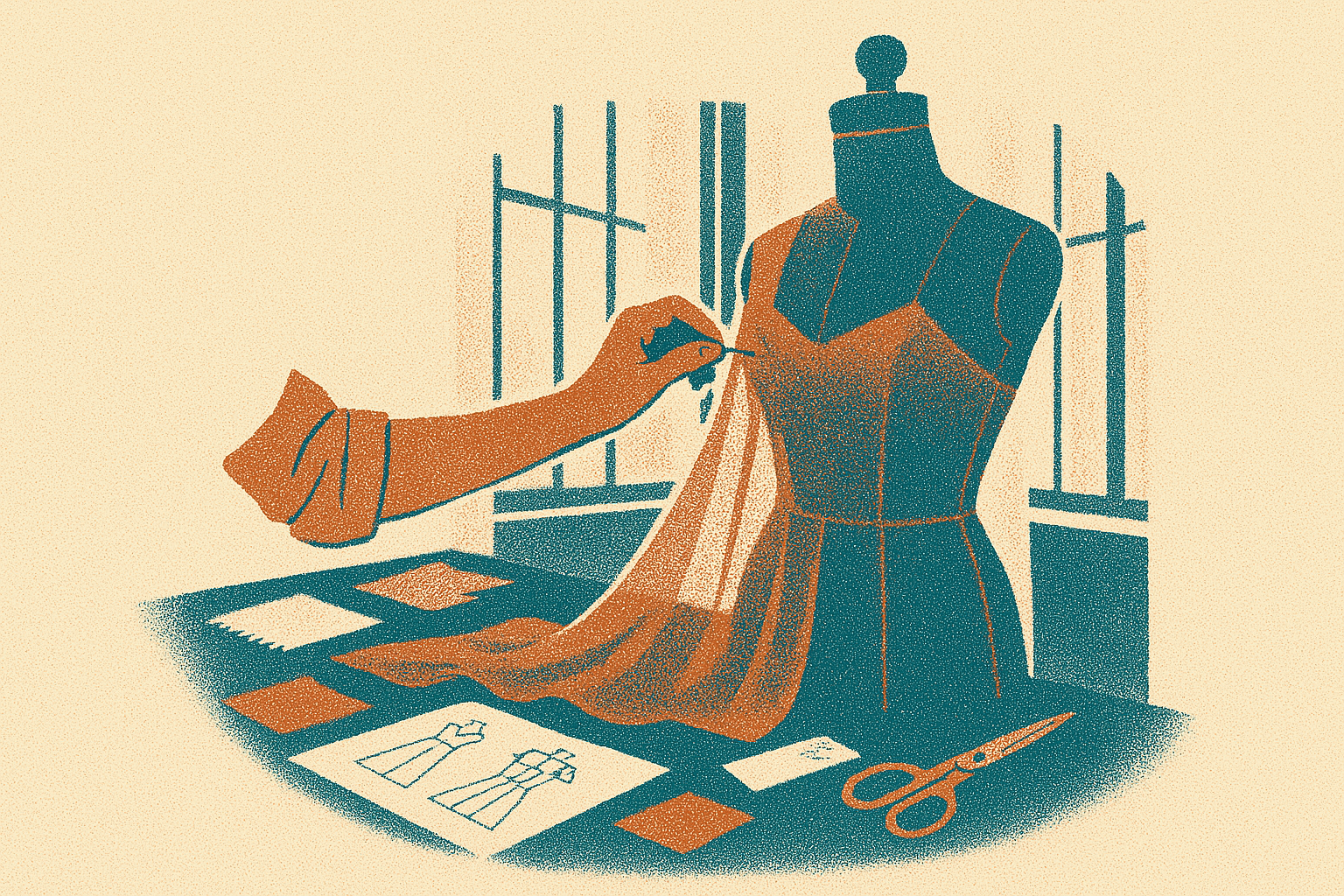
It was not. The atelier released the construction footage on Wednesday. There were hands. There were hours. There was a documented build sheet. The unreal colour was a real dye, the impossible fabric was a real silk-and-fibre composite, and the silhouette had been on the design house’s wall for eight months. The thing was made.
The discourse, by Wednesday evening, was sheepish. The discourse, by Thursday morning, had moved on. What I want to sit with is that twenty-four-hour stretch where everybody was certain.
We are now, collectively, primed to read images as suspect. That is a real shift and it has happened fast. Five years ago, an unreal-looking dress on a red carpet would have been read as fashion theatre. The same dress in 2026 was read as evidence of a stunt. Our default, at speed, is that anything striking is generated.
This is not a small change. It changes what fashion has to do to read as fashion. It changes what photography has to do to read as photography. It changes, eventually, what a body has to do to read as a body.
The atelier knew this and was, by all accounts, ready for the panic. They had the build documentation queued. They released it the moment the timing made sense — late enough that the misread had peaked, early enough that the truth still mattered. They have worked out, faster than most institutions, how to be a real thing in a moment that defaults to suspicion.
What the panic proved is that the default is not neutral. To be believed, in 2026, requires a level of disclosure that fashion did not historically need. The build sheet is the new red carpet. The proof of process is the new dress credit.
That is a strange place for the industry to be. It is also, in a quiet way, an opportunity. The houses that take disclosure seriously — that publish the inputs, the labour, the materials — are about to have an edge over the ones that wave it away as preciousness. Their work will read as real because they will have done the work to make it readable as real.
The houses that don’t will lose the benefit of the doubt every time something striking comes out of the studio. They will be guilty until proven beautiful, and the proof will get harder to provide.
A small irony worth noting. The dress that everybody assumed was AI is, by every metric, more handmade than the dress next to it on the carpet that everybody assumed was real. The real dress was a re-cut sample with off-the-shelf trimming. The unreal dress was eight months of bench work and a small atelier’s full attention.
Our suspicion got it exactly backwards.
That is going to keep happening until the disclosure norms catch up to the perception. The houses that move first on this will be the houses that get to keep being interesting. The ones that wait are going to find the audience increasingly unwilling to be impressed by anything they cannot verify.
The dress was real. The panic, sadly, will be a recurring feature. The houses that figure out how to live with both are doing the actual cultural work. The rest are going to keep being misread, and the misread is going to keep costing them the room.