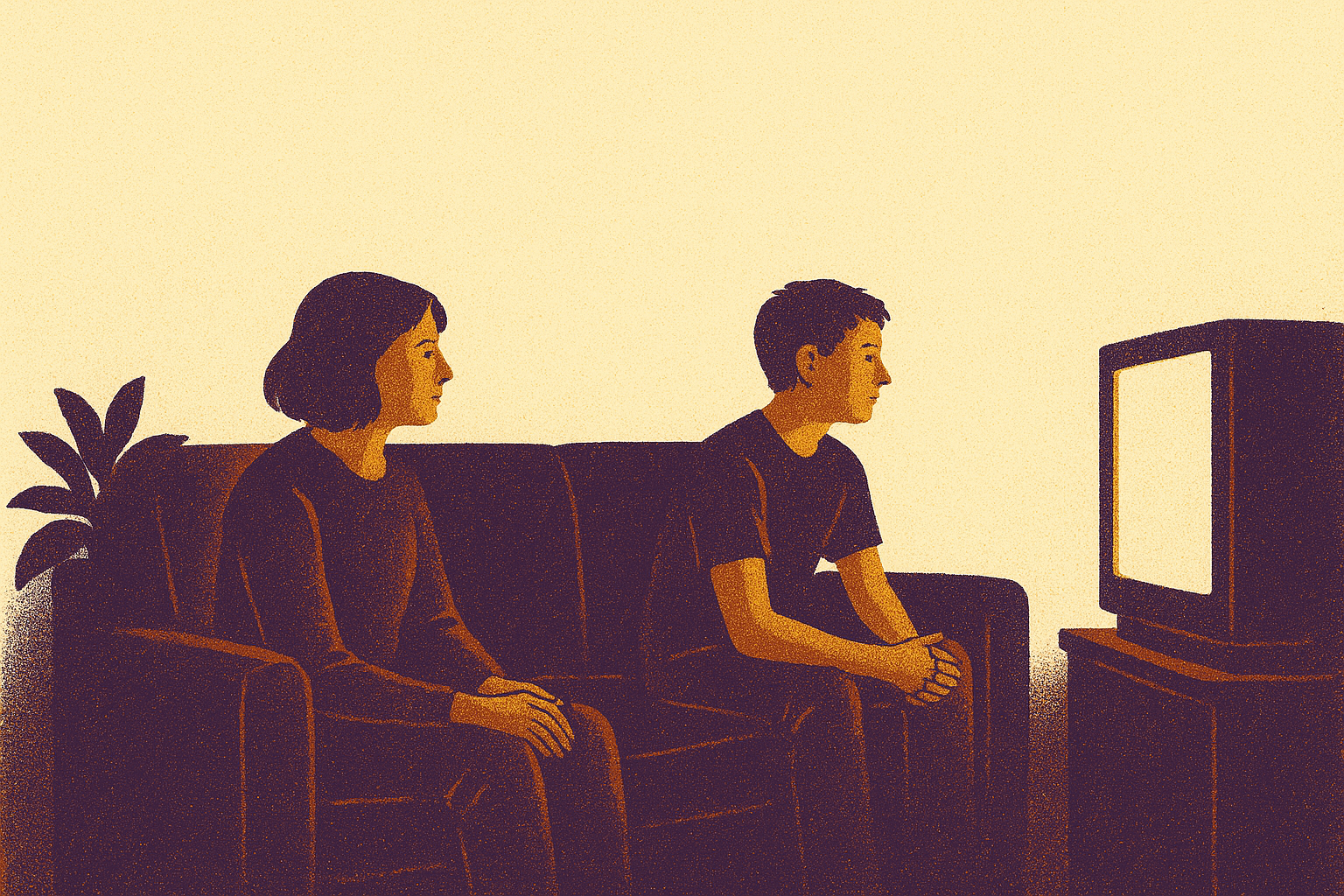
The Severance finale and the group chat that lost its mind.
A finale that refused to make either half the villain. The hour after was quieter than usual, and that was the review.
The Severance finale dropped at midnight on Friday and the group chat was awake by 1:14 a.m. There were sentence fragments. There were gifs. There was at least one all-caps theory that turned out to be wrong by sunrise. The show landed.
What surprised me wasn’t that people had opinions. It was the kind of opinions they had. Three years into this show and the fight in the chat was not about who was right or wrong. It was about which version of the same person we were rooting for. The innie or the outie. The version that kept showing up to work or the version that got to come home at the end.
That is a strange thing to be loyal to and the show made it the central question. I think that is why the finale worked.
There is a particular tenderness in the way Severance treats its split selves. It refuses to make either half the villain. The innies are not heroic for staying. The outies are not selfish for forgetting. They are both doing what they can with what they have, which is — and the show is honest about this — not very much.
The group chat in the early hours of Saturday was made of people who saw themselves in both halves. Most of us have a version of the innie self showing up to a thing five days a week without quite remembering why. Most of us have an outie self that gets to live in the evening and the weekend and pretends the other one is not paying for it. The show puts the trade in the room and says: pick.
Most of us refuse to pick. We say both. We say it is more complicated than that. The show, gently, agrees and keeps making us think about it anyway.
What landed in the finale was not the plot. The plot was, by Severance standards, modest. What landed was the choice each character made about which self to honour, and the cost of that choice. The show did not flinch from the cost. It also did not punish anyone for picking.
That is a generous form of television. It is also the rare kind that can survive social media, because the question it asks is not the kind that resolves in a single take. The innie loyalty conversation will keep going for weeks. The outies in our group chat will be back at work on Monday.
A small note about the music. The score under the final scene was so quiet you could hear the ventilation in the apartment. It made you lean in. That is a choice. It is the opposite of the way most prestige TV scores big moments. It said: this is small. It is also enormous. We trust you to feel it.
I trusted it. The chat trusted it. By the end of Saturday the conversation had moved from theory to feeling, which is, I think, where this show lives.
The hour after a Severance finale is not the same kind of hour as the hour after a pop release. It is quieter. It is more reflective. The same gathering ritual is happening — phones, screens, group chats, brief notes to friends — but the tempo is different. The show has earned a slower kind of arrival.
What I keep thinking about is that Severance is, in some ways, a workplace drama for the streaming era. The work the innies do is opaque. The reasons they do it are obscured. The hours feel long and the rewards feel abstract. That is also, more or less, the experience of being on a phone at 1:14 a.m. talking to a group chat about a TV show. The show knows.
So we sat with it. The finale stayed with us. The group chat got quieter as the night wore on, which is its own kind of review. We were not arguing. We were processing. That is a rarer thing than the discourse usually credits.
The innies and the outies will both be back in the chat next week. Severance, having earned both of them, deserves both. That is the most generous thing I can say about a finale: that it did not ask us to pick a side, and we still felt picked.